
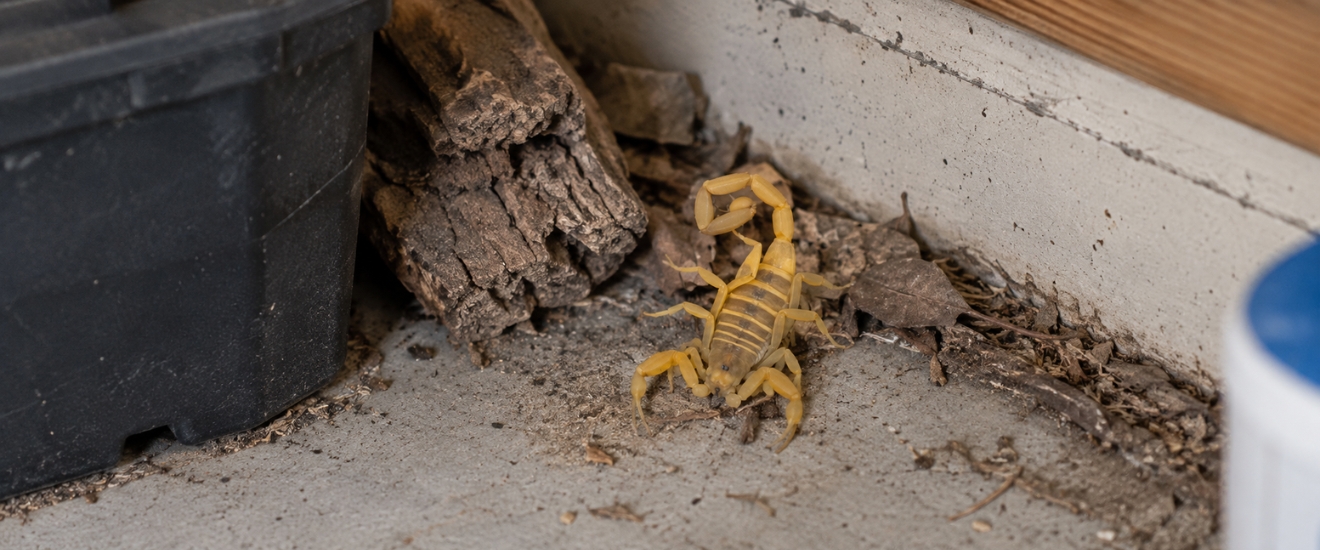
Finding a scorpion crossing the bathroom floor can make the inside of your house feel like the obvious place to focus. Yet the real story may have started outside hours—or even days—earlier. A shaded cavity in the landscaping, an undisturbed object beside the patio, or a narrow opening along the structure can give a scorpion exactly what it needs to stay out of sight. Scorpion control for New Braunfels homes is less about chasing the one that wandered into view and more about uncovering the hidden pockets that made your property worth exploring in the first place.
That can be challenging because scorpions are built for concealment. Their flattened bodies let them settle into surprisingly tight spaces, and their daytime habits keep them tucked away while much of the household is active. Some of their most useful shelter can be part of an otherwise ordinary, well-kept property.
Here are the places around your New Braunfels home where scorpions may be hiding closer than you think.
1. Behind Loose Tree Bark and Around Old Stumps
Loose bark, aging tree trunks, exposed roots, and old stumps can create narrow pockets that stay shaded during the hottest parts of the day. These spaces suit scorpions because their flattened bodies allow them to slip behind peeling bark or into irregular openings in deteriorating wood. If the area remains undisturbed, they can stay concealed there until nighttime activity begins. Decaying wood may attract insects as well, placing potential prey close to their daytime retreat.
Trees and old wood deserve greater attention when they sit close to patios, garages, walkways, or exterior walls. A stump tucked against the house places scorpion activity much closer to doors and structural openings than one at the edge of the property. Removing unnecessary dead wood, clearing accumulated debris around tree bases, and periodically checking loose bark can reduce these overlooked retreats without requiring major changes to healthy landscaping.
2. Inside Hollow Landscape Blocks
Retaining walls and decorative landscape blocks can contain more hidden space than their finished appearance suggests. Hollow blocks may have interior cavities, while joints between individual pieces can form narrow protected openings. These areas can remain dark even when the exposed surface receives direct sunlight. Leaves, soil, and vegetation collecting around the base can deepen the concealment and make scorpions difficult to notice during an ordinary walk through the yard.
Hardscaping deserves closer inspection when it runs beside the foundation, patio, garage, or another frequently used portion of the property. Homeowners do not need to dismantle a retaining wall simply because scorpions have been seen nearby, but keeping the base clear of excessive vegetation and organic debris makes these spaces easier to monitor. Accessible cracks or openings deserve careful attention, particularly when the wall connects landscaped portions of the yard with areas close to the house.
3. Under Patio Storage That Rarely Moves
Outdoor storage bins, covered grills, unused planters, stacked cushions, pool accessories, and gardening equipment can leave protected spaces beneath or behind them. Items that remain in one position for weeks or months are particularly easy to overlook because the ground underneath receives little disturbance. When several belongings are packed tightly together, the resulting pockets can give a scorpion somewhere to retreat from daylight without remaining visible.
Placement can make these spots more significant. Containers and equipment pushed directly against an exterior wall put concealed spaces beside door thresholds, wall gaps, and possible routes toward the house. Periodically moving and reorganizing patio belongings exposes areas that normally remain covered. Long-undisturbed items should be examined carefully before lifting or reaching underneath them rather than placing bare hands into spaces that cannot be clearly seen.
4. Between Firewood Pieces Near the Bottom of the Stack
Firewood creates a network of natural crevices, particularly in the lowest layers where logs remain shaded and compressed together. Irregular pieces leave gaps that can provide daytime cover, while the ground beneath a pile may support insects and other small organisms that scorpions prey on. Even a neatly arranged stack can contain numerous secluded spaces, so a tidy appearance does not necessarily make stored wood less attractive to these arachnids.
The position of the pile can influence how much of a concern it becomes. Firewood stacked against an exterior wall puts scorpions and potential prey immediately beside the structure. Keeping wood farther from the house creates useful separation, while raising it off the ground where practical can make the surrounding area easier to check. Individual logs should be examined before being carried indoors, especially pieces taken from the darker, less-disturbed layers near the bottom.
5. Along the Underside of Stone and Brick Edging
Stone and brick borders around flower beds, pathways, and landscaped areas may look exposed from above while concealing narrow spaces underneath. Soil can settle, individual pieces can shift, and small gaps may develop where edging materials meet the ground. Those undersides can stay shaded for long periods, especially when nearby plants or mulch block sunlight. Since scorpions can fit into tight spaces, even modest separation beneath an edging piece can offer usable cover.
Long stretches of edging become more noteworthy when they lead from landscaped areas toward patios, garages, or the foundation. Rather than removing decorative borders, homeowners can keep vegetation trimmed, clear accumulated leaves, and correct pieces that have become loose or uneven. Maintaining a visible, accessible edge makes unusual activity easier to spot while reducing undisturbed pockets immediately surrounding the home.
6. Inside Garage Clutter Along Exterior Walls
Garages frequently contain the type of quiet spaces scorpions can use after entering a structure. Cardboard boxes, tools, sporting equipment, gardening supplies, seasonal decorations, and other belongings often accumulate along exterior-facing walls. Once several items are packed together, the floor and wall edges behind them may remain untouched for months. A scorpion entering the garage can quickly disappear among these belongings before anyone realizes it is there.
Keeping storage off the floor where practical can improve visibility in these areas. Shelving and organized containers make it easier to see along wall edges while eliminating many of the concealed pockets created by loosely stacked possessions. Pay particular attention near garage doors, utility penetrations, and exterior wall joints, where a possible access route may sit directly beside stored items. Worn door seals and openings near the bottom corners deserve a closer look during the same check.
7. Around Irrigation Boxes and Utility Covers
Irrigation valve boxes, meter areas, and other ground-level utility enclosures are easy to forget because homeowners may rarely need to open them. Their enclosed construction can create dark spaces beneath the lid and around internal components. Vegetation growing over the enclosure can add another layer of cover. Irrigation equipment can become more attractive to insects when leaks or excessive watering keep the surrounding soil damp, potentially creating hunting opportunities for scorpions nearby.
Keeping grass and dense vegetation trimmed around these enclosures makes changes easier to notice and allows the area to be examined without first digging through overgrowth. Irrigation leaks should be repaired so excess moisture does not persist around the equipment. When a cover needs to be opened, look carefully before placing your hands inside. Ground-level boxes can contain corners that are difficult to see at first glance, making a visual check the safer starting point.
8. In Gaps Where Foundations Meet Exterior Materials
The transitions between a foundation and siding, masonry, trim, door frames, or utility lines can develop small spaces as materials age and weather. Some openings may be narrow enough to escape casual notice yet large enough for a scorpion to occupy. Their location directly against the structure makes them especially important, since a concealed scorpion is already much closer to the home’s interior than one resting elsewhere in the yard.
Walking the perimeter at ground level can reveal deteriorated sealant, damaged weatherstripping, openings around utility penetrations, and other accessible vulnerabilities. Areas where patios, landscaping, garages, or exterior fixtures meet the structure are worth examining closely because multiple materials come together at these points. Sealing appropriate openings and repairing worn exterior components can reduce available cover while limiting potential routes toward indoor spaces.
What Can You Do About Scorpion Hiding Places?
Making your property less favorable to scorpions starts with removing the conditions that give them reliable daytime cover. Move firewood and long-term outdoor storage away from exterior walls, clear dead vegetation and accumulated debris, repair irrigation leaks, and keep garage floors organized enough to see along the edges. Worn door seals and accessible exterior gaps deserve attention as well, since these vulnerabilities can put scorpions one step closer to indoor spaces.
When sightings continue, the source may be somewhere that is easy to pass without noticing. At Deep Six Pest Control, our team knows where to look for scorpion activity around New Braunfels homes—from protected exterior spaces and landscaping features to the small structural openings that can bring these pests closer to bedrooms, bathrooms, and other living areas. We use what we find to determine where control efforts should be concentrated, rather than treating the property as though every area presents the same risk.
Seeing one scorpion should not leave you wondering how many concealed spots around your property could be supporting more activity. Reach out to Deep Six Pest Control for a free quote. We’ll help take away the shelter and access scorpions depend on, so the next place they choose to hide is less likely to be anywhere around your home.