South Central Texas is full of wildlife, and while most animals thrive outdoors, many find their way into homes and yards. For homeowners in this region, these encounters can quickly turn into costly and stressful problems.
Below are the wildlife problems local families encounter most frequently—and how they can affect your property.
Raccoons in Attics, Chimneys, and Crawlspaces
Raccoons are highly adaptable and can exploit even small vulnerabilities around a home. Loose shingles, damaged soffits, or uncapped chimneys provide easy access points. Once inside attics or chimneys, they shred insulation for nesting material, contaminate spaces with droppings, and create strong odors. Their activity is usually noticed through loud thumping or scratching sounds at night, since raccoons are nocturnal.
Beyond the mess, raccoons pose serious safety risks. They are strong enough to tear through barriers and can chew wiring, increasing the chance of electrical fires. They may also carry diseases such as leptospirosis or roundworm, which can spread through droppings. Because raccoons can be aggressive when cornered, humane professional removal is the safest option, followed by exclusion repairs to prevent re-entry.
Opossums Around Trash and Crawlspaces
Opossums thrive in urban and suburban areas because they are opportunistic feeders. They are often found rummaging through trash bins, compost piles, or pet food left outdoors. Crawlspaces and porches provide shelter, where they leave behind droppings and nesting debris. While they don’t usually damage structures directly, their presence creates sanitation issues and attracts fleas and ticks that can spread to pets and people.
These animals are resilient and can adapt to almost any environment. Their tendency to “play dead” when threatened can make them difficult to remove, and they may return repeatedly if food sources remain accessible. Preventing opossum problems requires securing trash, removing outdoor food, and sealing crawlspace openings. Professional exclusion ensures they don’t establish long-term shelter under homes.
Squirrels in Attics and Walls
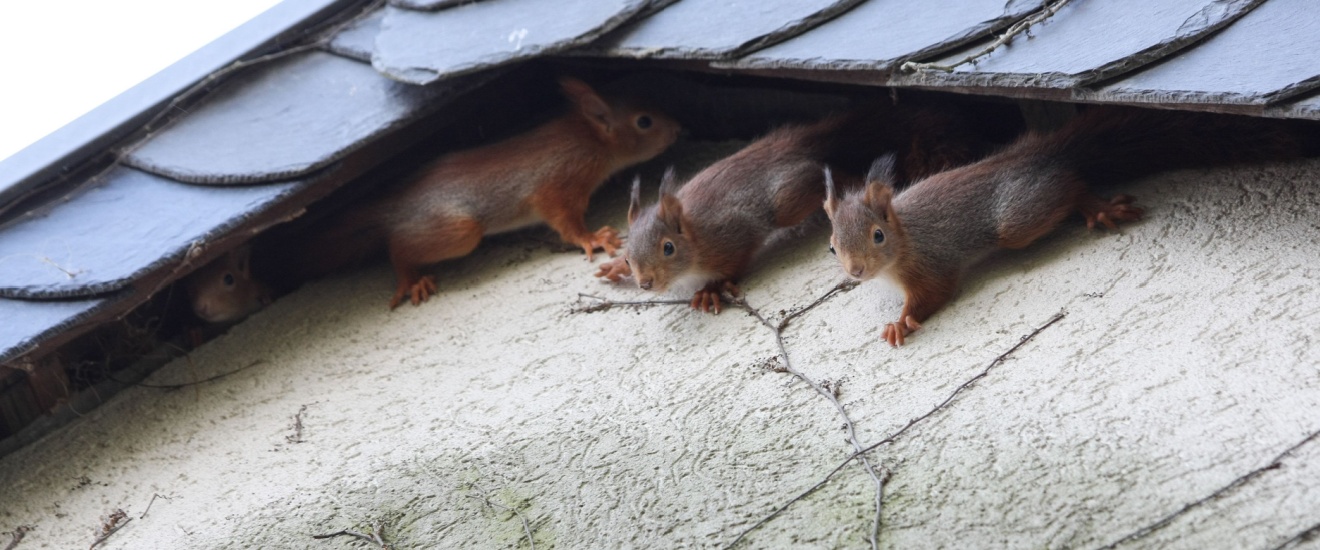
Squirrels are agile climbers that use trees and utility lines to reach rooftops. They chew through siding, vents, or soffits to gain access to attics and wall cavities. Once inside, they build nests using insulation and other materials, leaving behind droppings and urine that damage structures. Their constant gnawing can weaken wood framing and chew through electrical wiring, creating fire hazards.
Homeowners often notice squirrels through scratching or running sounds during the day, since they are diurnal. Infestations can grow quickly because squirrels reproduce multiple times a year. Removing them requires sealing entry points and trimming tree branches that provide easy access. Bird feeders and unsecured food sources should also be managed to reduce attractants.
Skunks Beneath Decks and Sheds
Skunks are notorious for burrowing under decks, sheds, and crawlspaces. Their digging weakens foundations and creates tunnels that invite other pests. The most obvious issue is their spray, which can linger for weeks and permeate walls, furniture, and clothing. Skunks are nocturnal, so homeowners often discover damage in the morning or notice foul odors after nighttime encounters.
In neighborhoods, skunks are drawn to unsecured trash bins, compost piles, and pet food left outdoors. They may also dig in lawns for grubs, leaving behind unsightly holes. Humane removal paired with exclusion repairs is the best way to prevent repeat encounters. Installing barriers around decks and sheds and securing food sources helps keep skunks away.
Bats in Rooflines and Eaves
Bats can squeeze through openings as small as half an inch, making rooflines, vents, and eaves prime entry points. Once inside, they roost in attics, leaving behind guano that creates odor problems and health risks. Colonies can grow quickly, and their droppings may damage insulation, drywall, and wood framing.
While bats are beneficial outdoors for insect control, they become a serious issue indoors. Guano dust can spread diseases such as histoplasmosis, and bats may carry rabies. Because bats are protected species, professional exclusion is the only safe and legal solution. This involves sealing entry points after the colony has been safely removed, ensuring they cannot return.
Armadillos Burrowing Near Foundations
Armadillos dig extensively in search of insects and grubs, leaving behind holes across lawns and gardens. Their burrowing can undermine porches, driveways, and foundations, creating structural concerns for homeowners. Unlike other wildlife, they rarely enter homes, but their activity outdoors can still cause significant disruption.
These animals are most active at night and often return to the same areas repeatedly. Their digging not only damages landscaping but also creates hazards for pets and children. Preventing armadillo activity requires habitat modification, such as reducing food sources, installing barriers, and sealing vulnerable soil areas. Professional removal may be necessary if they continue to damage property.
Snakes Around Properties
Snakes often enter yards through landscaping, woodpiles, or gaps in foundations. While many Texas snakes are non-venomous, their presence can alarm families. Venomous species, such as copperheads or rattlesnakes, pose real risks when hiding in garages, sheds, or crawlspaces. Encounters are most common in warm months when snakes are active and hunting.
Most snakes are drawn to properties with abundant food sources, such as rodents or insects. Eliminating these attractants is key to prevention. Homeowners should keep lawns trimmed, remove clutter, and seal foundation cracks to reduce hiding spots. Professional inspection helps identify whether a snake is dangerous and ensures safe removal, especially in areas where children or pets play.
Where Wildlife Finds a Way In
Most nuisance wildlife enters through vulnerable points: roof gaps, attic vents, crawlspace openings, or damaged siding. Once inside, they seek shelter, food, and nesting areas. Because each species has different habits, effective prevention requires a tailored approach—sealing entry points, reducing attractants, and maintaining regular inspections.
Homeowners should pay close attention to areas like chimneys without caps, gaps around utility lines, and damaged foundation vents. Even small cracks or holes can be exploited by wildlife looking for shelter. Regular inspections, especially after storms or seasonal changes, help catch vulnerabilities early before animals move in.
Wildlife intrusion often begins with subtle signs that are easy to overlook—such as scratching sounds, droppings near entry points, or disturbed insulation. By the time these signs are noticeable, animals may already be nesting inside. That’s why proactive measures like reinforcing roof flashing, installing vent covers, and trimming back tree branches are critical. Preventive maintenance not only keeps wildlife out but also protects the long-term integrity of the home.
Wildlife Control Strategies for New Braunfels Homeowners
Encounters with wildlife in South Central Texas aren’t just bothersome; they can create serious risks for your property and those who live in it. The most effective approach combines humane removal with exclusion repairs that block re-entry. Addressing the root causes of infestations, such as unsecured trash or gaps in siding, ensures animals are not only removed but prevented from returning.
Homeowners can take proactive steps to reduce risks:
- Seal gaps in siding, vents, and rooflines to eliminate entry points.
- Install chimney caps and reinforced vent covers to block common access routes.
- Secure trash bins and remove outdoor food sources that attract wildlife.
- Trim tree branches and clear clutter that provides pathways or hiding spots.
- Schedule regular inspections to catch vulnerabilities before animals move in.
Wildlife problems don’t end with removal—they end when the source is fixed. At Deep Six Pest Control, we track how animals get inside, close those openings, and apply exclusion strategies that prevent repeat invasions. From attic damage to burrows under decks, our solutions are built to solve the problem permanently.
Call Deep Six Pest Control today to schedule your wildlife inspection and uncover what’s invading your New Braunfels home.