
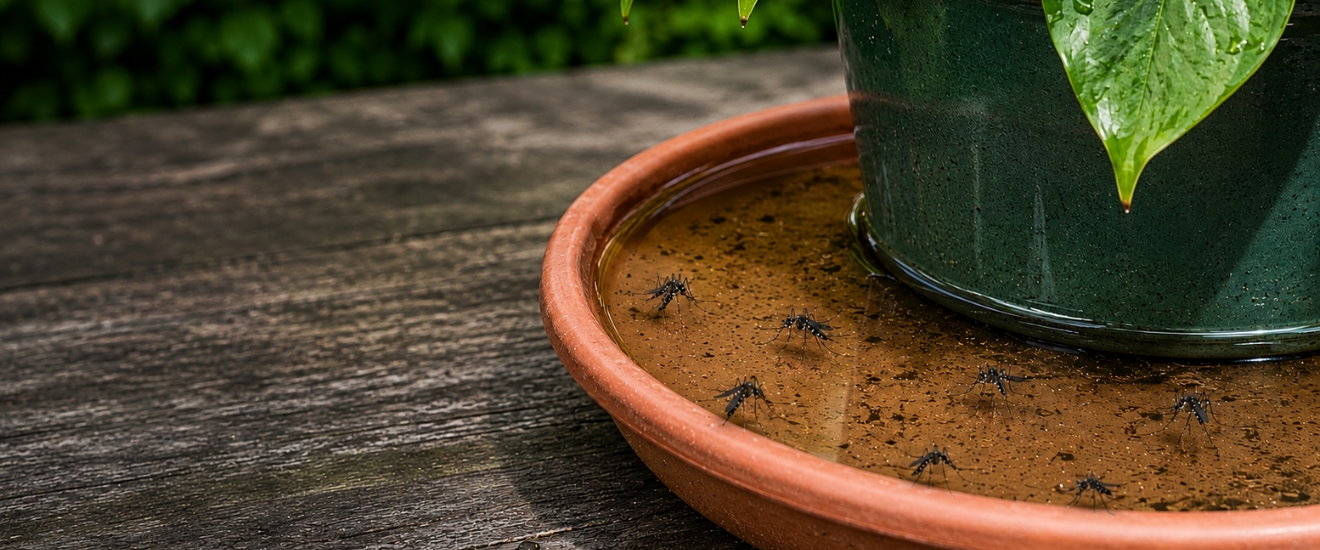
Mosquito trouble in a New Braunfels backyard can begin in places that barely look wet. A rain-filled plant saucer, water folded into a tarp, or a clogged gutter can provide the stagnant moisture mosquitoes need to reproduce. With South Central Texas warmth helping mosquito activity persist through much of the year, overlooking a few small water sources can mean dealing with far more buzzing and biting around patios, pools, and outdoor gathering spaces.
Before reaching the point where professional mosquito treatment becomes the next move, it pays to investigate your backyard like a mosquito would: searching for quiet, protected water that can sit undisturbed. Some of the most productive breeding spots are ordinary objects homeowners walk past every day. The locations below are among the worst places to leave unchecked around a New Braunfels property.
1. Clogged Gutters
Gutters can become mosquito breeding sites when leaves, twigs, roof sediment, and other debris prevent rainwater from draining properly. Instead of flowing toward the downspout, water may remain trapped in low sections of the gutter. Because the problem occurs above eye level, homeowners can go weeks without noticing it.
This location can be particularly troublesome after periods of rain. Water elsewhere in the yard may evaporate quickly in the Texas heat, while moisture surrounded by gutter debris can remain protected for longer. Downspouts can contribute to the problem when blockages prevent proper drainage or discharge water into an area where it continually pools near the foundation.
Inspecting and cleaning gutters periodically helps remove both trapped water and the debris responsible for retaining it. Homeowners should pay attention to water overflowing from gutter edges, slow-moving downspouts, and sections that remain wet after the rest of the roof drainage system has emptied. Correcting those drainage problems removes a breeding opportunity while helping the gutter system perform its intended job.
2. Plant Saucers and Outdoor Planters
Potted plants are common around patios, porches, decks, and backyard seating areas, but the containers beneath them can quietly collect water. Plant saucers are designed to catch excess moisture, making them particularly easy to overlook during mosquito inspections. Repeated watering can keep these small reservoirs replenished even during stretches without rain.
Decorative pots create similar concerns when their drainage holes are blocked or nonexistent. Water can settle beneath soil, inside an empty planter, or within decorative containers tucked between plants. Shaded placement can slow evaporation, giving stagnant moisture more time to remain around areas where people regularly relax outside.
Check saucers and containers whenever plants are watered and after significant rainfall. Empty unnecessary standing water rather than repeatedly topping off containers that are already holding moisture. Unused pots should be stored upside down or somewhere protected from rain so they do not turn into accidental water collectors between gardening projects.
3. Birdbaths and Decorative Water Features
Birdbaths naturally contain water, which makes maintenance more important than simply checking whether they are full. When the same water remains in the basin for an extended period, it can accumulate leaves, dirt, feathers, and organic material. A quiet birdbath in a shaded corner of the yard can become especially easy to forget.
Decorative fountains and similar water features require attention for the same reason. Moving water and properly maintained equipment create different conditions from a basin where circulation has stopped. A broken pump, clogged component, or unused fountain can leave stagnant water sitting undisturbed while the surrounding landscaping makes the problem less visible.
Homeowners do not have to eliminate these backyard features to reduce mosquito breeding opportunities. Birdbath water can be emptied, the basin cleaned, and fresh water supplied regularly. Fountains should be checked to make sure pumps and circulation systems remain functional, particularly after storms or periods when the feature has not been used.
4. Poorly Draining Areas of the Lawn
Standing water does not always collect inside an object. Low spots across a lawn can retain rain or irrigation water because of compacted soil, grading issues, heavy watering, or inadequate drainage. These areas may appear as shallow puddles immediately after a storm and remain damp long after surrounding grass has dried.
Repeated pooling deserves closer attention because it can indicate a persistent property condition rather than an isolated weather event. Sprinkler systems can make matters worse when they repeatedly supply water to an area that cannot drain efficiently. Homeowners may not recognize the pattern if irrigation runs early in the morning or overnight and the affected portion of the yard is rarely visited.
Walk around the property after rainfall and irrigation to see which sections remain wet. Adjusting sprinkler duration or frequency may solve problems caused by excessive watering, while recurring low spots may need drainage or grading improvements. Addressing the cause is more effective than simply dumping or sweeping away the visible water every time it appears.
5. Tarps, Wheelbarrows, and Yard Equipment
Ordinary outdoor equipment can become an unexpected source of stagnant water. A wheelbarrow left upright can fill during a storm, while a loosely folded tarp can develop several depressions that trap smaller pools. Garden carts, buckets, equipment covers, lids, and similar items can create the same problem.
These locations are particularly easy to miss because the amount of water may depend entirely on how an object is positioned. A tarp that appears properly stored from several feet away could contain multiple water-filled folds. Equipment kept along a fence, beside a shed, or behind the house may remain undisturbed long enough for trapped moisture to become a recurring issue.
Good storage practices can eliminate many of these breeding opportunities. Wheelbarrows and carts should be positioned so rain drains out, while tarps should be stretched securely, folded, or stored somewhere dry. After storms, checking outdoor equipment for trapped water takes only a few minutes and can reveal pockets that would otherwise remain until they evaporate.
6. Children’s Toys and Kiddie Pools
Backyard play areas can contain numerous objects capable of collecting rain and sprinkler water. Kiddie pools are among the most obvious, but smaller toys can be just as important. Plastic trucks, buckets, water tables, play structures, and hollow toys may contain recesses where water settles without being immediately visible.
A collection of toys can create several small breeding locations across the same yard. Water trapped inside a toy near a fence or beneath a playset may receive little direct sunlight, slowing evaporation. Because children frequently move toys from one location to another, new water-holding spots can appear throughout the backyard after every storm.
Kiddie pools should be emptied and positioned so they cannot refill with rain when they are not being used. Smaller toys can be stored in a covered location or placed where water drains freely. Parents can make a quick inspection of the play area part of their post-rain routine, paying particular attention to hollow equipment and recessed surfaces.
7. Pet Water Bowls
Outdoor pet bowls present a unique situation because the water serves an important purpose. Dogs and other pets spending time outside need reliable access to fresh drinking water, so mosquito prevention should focus on keeping that water clean and regularly refreshed rather than removing it.
Problems develop when bowls sit in shaded locations and the water remains unchanged for extended periods. Large properties may have several bowls positioned around patios, kennels, garages, or fenced areas, making one easy to forget. Dirt, leaves, pet hair, and outdoor debris can gradually accumulate in neglected containers as the water becomes increasingly stagnant.
Emptying, rinsing, and refilling outdoor bowls regularly keeps drinking water fresher for pets while disrupting conditions mosquitoes could exploit. Place bowls somewhere convenient enough that they are included in the household’s normal routine. If multiple outdoor water stations are necessary, check each one rather than assuming frequent pet use prevents stagnant conditions.
8. Pool Covers and Neglected Pool Areas
A properly maintained swimming pool is not the only place homeowners should inspect when looking for mosquito habitat. Pool covers can develop depressions where rainfall accumulates, creating smaller pockets of stagnant water above the treated pool itself. Depending on the shape and position of the cover, those pockets may remain even while the swimming pool beneath it receives normal maintenance.
The surrounding pool area can contain hidden water sources as well. Unused floats, storage containers, equipment, clogged drains, and other accessories may catch rain or irrigation water. A pool that is temporarily unused deserves closer attention if circulation and routine maintenance have stopped, since prolonged stagnant conditions can create a much different environment than an actively maintained swimming area.
Remove collected rainwater from covers and inspect equipment after storms. Keep nearby accessories stored so they cannot hold water, and make sure pool circulation and maintenance remain consistent during periods when the pool receives less use. For New Braunfels homeowners who spend much of the warmer season outdoors, controlling water around the pool area can help make one of the property’s most frequently used spaces less attractive to mosquitoes.
Reducing Mosquito Pressure Across Your Entire Backyard
Removing breeding water is one of the most practical steps homeowners can take, but mosquito prevention should extend beyond the obvious puddles. Adult mosquitoes frequently spend time in shaded, humid vegetation and protected areas around a property. Dense shrubs, leafy landscaping, spaces beneath decks, and other sheltered locations can provide resting areas even when standing water has been carefully managed.
A useful routine is to inspect the backyard after rainfall and periodically during heavy irrigation periods. Look beyond the lawn and examine containers, drainage components, landscaping features, children’s equipment, pet areas, and less frequently visited corners of the property. Fixing recurring drainage issues can provide more lasting value than repeatedly emptying water without addressing why it keeps accumulating.
Persistent mosquito activity may require a broader approach. Deep Six Pest Control offers mosquito control services for New Braunfels and surrounding South Central Texas communities, with treatments focused on outdoor areas where mosquito activity occurs. Our mosquito programs include full-yard treatment options designed to provide more consistent protection throughout mosquito season.
If you’ve emptied the plant saucers, cleared the gutters, checked the kids’ toys, refreshed pet bowls, and removed rainwater around the pool but mosquitoes are still taking over your backyard, there may be less obvious problem areas you haven’t found. Contact Deep Six Pest Control for a free quote and get a treatment plan focused on the places around your New Braunfels property where mosquitoes continue to gather.